
Written by Milda, Registered MSc Nutritional Therapist and NCFED-trained practitioner specialising in binge eating, emotional eating and ADHD. With roots in Bath & Bristol, UK , working globally online.
With all the protein hype from Instagram influencers adding protein in pancakes, brownies and every possible meal they can imagine, it is understandable that many people I work with in my nutritional practice clinic can feel skeptical about the suggestion to add more protein to their ADHD diet.
And yet, ADHDers are the people who truly need to make sure they get adequate protein. If you have or suspect you have ADHD you may know that ADHD is linked to lower levels of dopamine and less effective dopamine signalling in the brain than neurotypical people.
Therefore, it’s key for ADHDers to make sure they create the conditions for their brain to increase dopamine production and signalling. Protein, especially phenylalanine and tyrosine, are the raw building blocks that come from protein sources and get converted into dopamine.
In this article you’re going to find out how much protein an ADHD brain needs, how low protein is linked to sugar cravings and the best protein sources for the ADHD diet.
Why do ADHD Brains Struggle With Cravings?
Some of the common factors in ADHD include lower dopamine and norepinephrine and less efficient signalling of these neurotransmitters. This can influence dysregulation of focus, attention and motivation.
Often, because of the low dopamine, the ADHD brain seeks to increase dopamine levels quickly, so it turns to foods for a quick dopamine boost, such as sugary foods, processed foods and stimulants.
As well as managing unpredictable energy, focus and motivation, the ADHD brain can also struggle with impulse control and saying “no”. And it can be difficult to pause before reaching for the biscuits in the office or harder to walk past the bakery when smelling cinnamon buns.
This is why the ADHD brain can be more prone to sugar cravings, binge eating and emotional eating as a way to cope and self-regulate.
How Much Protein Do You Really Need?
One of the most common questions I get asked in my nutritional therapy clinic is “How much protein should I be having every day?” If you have an ADHD brain, your protein requirement may be slightly higher than for the general population.
The UK Reference Nutrient Intake (RNI) is 0.75 g/kg/day and the Recommended Daily Amount (RDA) for USA is 0.80 g/kg/day are created to avoid deficiency.
No official guidelines for protein for ADHD and neurotypical brain exist. Sadly there is also little current research that can state “eat X amount of protein to improve ADHD symptoms”. One case control study of 200 children found that ADHDers were eating less protein, less nutritious foods and more foods higher in simple carbs and sugars.
Functional psychiatrist James Greenblatt in his book Integrative medicine for children with ADHD: An overview notes that higher protein meals can improve focus and reduce hyperactivity by supporting blood sugar balance and neurotransmitter synthesis.
While science is still on the way to determine ADHD needs for protein, in my nutritional therapy practice I notice that by intentionally including more protein into their diets, ADHD clients see real changes in their energy, fullness, moods and sleep.
Therefore aiming for 1.00–1.50 g/kg/day could be optimal for the ADHD brain.
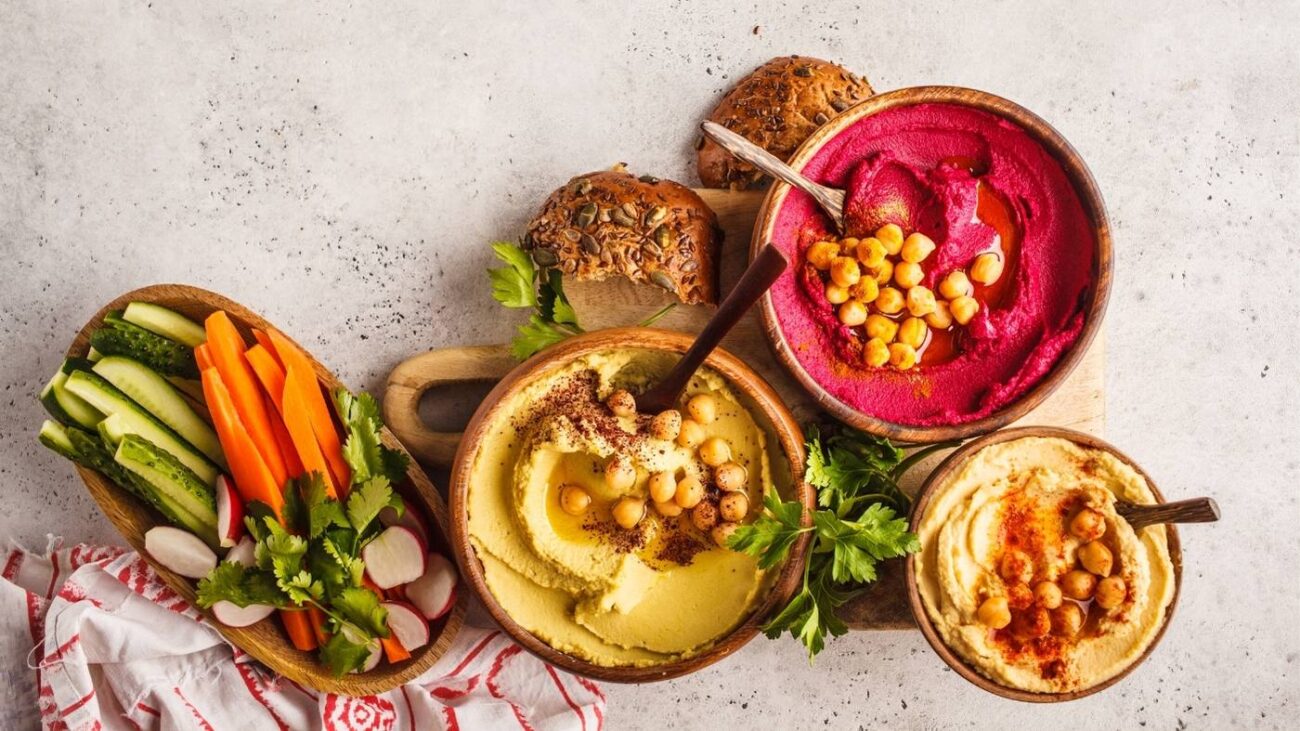
For reference, a chicken breast (~ 100g) is 31 g protein, ⅓ of a 200g pot of hummus is ~5 g of protein and a handful of almonds (~ 30g) is ~6 g protein.
Best Protein Sources for ADHD Brains
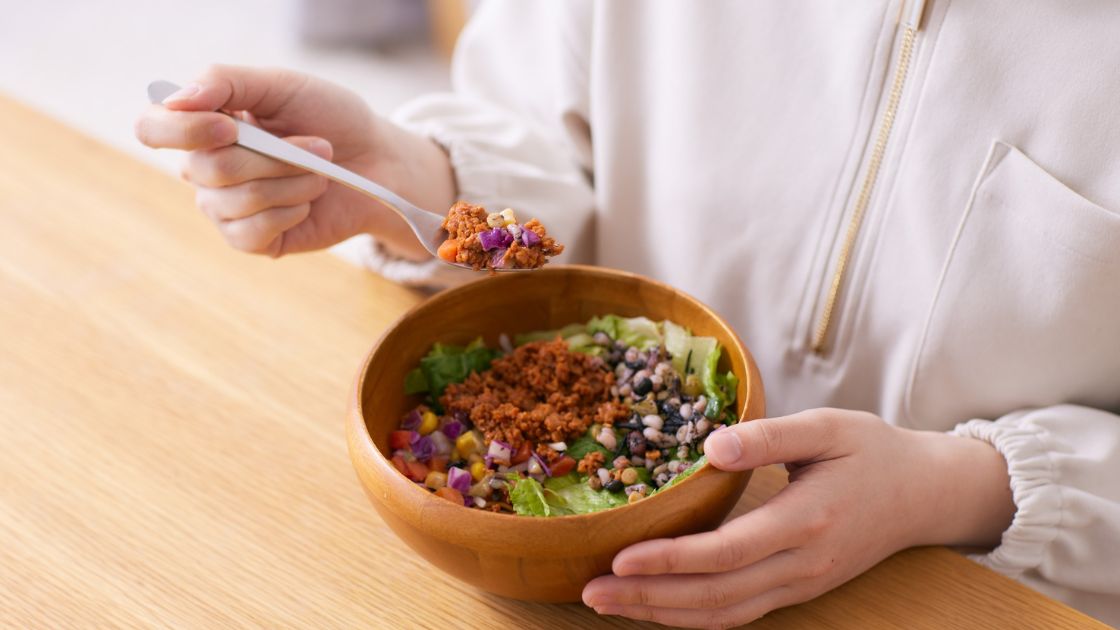
The easy way to make sure you get enough protein in the day instead of calculating each meal, is to make sure you add at least ⅓ of your plate of quality protein for main meals. Animal proteins generally are much higher in protein amount and contain complete proteins, which means that it has all the essential amino acids we need through the day.
Plant-based proteins are generally lower in protein amount and have more incomplete proteins, yet can contain more vitamins, minerals and other nutrients. In fact, one observational study with over 1,733 Korean children with ADHD showed that those who consumed more plant protein saw improvements in ADHD focus. However, this was only in the inattentive subtype.
Therefore the best idea for ADHDers is to include both animal and vegetarian sources of protein (if ethically aligned) for balance, rather than focusing on one or the other.
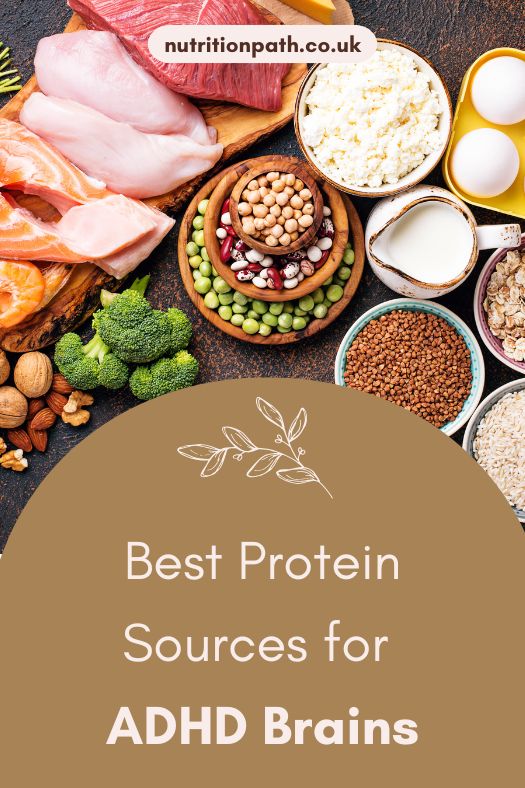
Here are some food sources that are higher in phenylalanine and tyrosine amino acids:
🌱 Animal-based protein sources:
Lean meats (chicken, turkey, beef, pork), fish & seafood (salmon, tuna, cod, mackerel, shrimp), eggs, dairy (milk, yogurt, cheese, cottage cheese), and whey protein.
🍳 Plant-based protein sources:
Soy products (tofu, tempeh, edamame, soy milk), legumes (lentils, chickpeas, black beans, kidney beans), seeds (pumpkin, sesame, sunflower), nuts (almonds, peanuts, walnuts, cashews), quinoa, spirulina, oats, and whole grains (brown rice, buckwheat, wheat germ).
Practical Tips to Add More Protein Into Your ADHD Diet
If you’re stuck for ideas on how to get some extra protein in your ADHD diet, start with some simple additions or swaps:
- Add peanut butter to your porridge
- Add edamame beans to stir-frys
- Choose full fat Greek yoghurt instead of a fruit yoghurt
- Stir chickpeas, beans and lentils into soups, salads and sauces
- Sprinkle seeds on your porridge, salads or yoghurt.
Start with a small next step- add 2 tablespoons of foods higher in protein to what you are already having. Go slowly, but keep the consistency going.
Adding a good quality protein powder without any artificial food dyes or sweeteners can be a good idea if you’re struggling with regular meals and having enough protein is difficult for you.
Also, check out this post for some of the additional essential nutrients for the ADHD brain beyond protein.
Bottom Line
Protein can be a super useful addition for the ADHD diet and can support the ADHD brain to be more focused, motivated and help with more stable daily energy and mood. You don’t have to make a huge overhaul of your entire diet overnight. In fact, experience from my private practice shows that those who succeed with long-term change take small but intentional steps daily.
Start with simply adding protein to one of your meals for one week, e.g. breakfast. Once it’s a habit, add another meal and keep moving. And if you’re feeling a little lost with the initial steps or want help from a nutritional therapist, check out if working together with Milda and keeping regular accountability could help you change food habits to work for your ADHD brain.
FAQs on ADHD, protein and cravings
-
Does protein really help ADHD focus and energy?
Yes. ADHD is linked with lower dopamine and less efficient dopamine signalling. Protein provides amino acids — especially tyrosine and phenylalanine — which are the building blocks for dopamine. When dopamine levels and signalling improve, many people experience better focus, steadier energy and reduced ADHD symptoms.
-
What is the best protein source for ADHD?
Protein sources richest in tyrosine and phenylalanine tend to be especially supportive. These include:
– soy products (tofu, tempeh, soybeans)
– cheese, especially Parmesan
– lean meats (chicken, turkey, beef)
– fish (salmon, tuna)
– eggs
– nuts and seeds (peanuts, almonds, pumpkin seeds, sesame seeds). -
Can low protein cause ADHD sugar cravings?
Yes. Low protein intake can contribute to blood sugar instability and reduced dopamine production, both of which drive intense sugar cravings.
Blood sugar crashes lead to urgent hunger, while low dopamine drives cravings for quick dopamine boosts — often sugary or highly processed foods. -
How much protein should someone with ADHD eat daily?
General guidelines are:
UK RNI: 0.75 g/kg/day
US RDA: 0.8 g/kg/day
There is currently no ADHD-specific protein requirement in research. However, clinical experience in nutritional therapy shows that many ADHDers feel better focus, mood and energy in the range of 1–1.5 g/kg/day, depending on the person, activity level and health needs. -
Is plant-based protein enough for ADHD brains?
Yes — but it requires attention. Plant proteins are valuable because they also provide fibre, antioxidants, vitamins and minerals. However:
– many are “incomplete” proteins,
– they often contain less protein per serving,
– ADHDers may need to eat larger amounts or combine sources (e.g., beans + grains) to meet needs.
A plant-based diet can absolutely support ADHD — it just requires consistent protein intake and smart combinations.
References (for further reading):
- Greenblatt, J. M., & Greenblatt, J. M. (2015). Integrative medicine for children with ADHD: An overview. Child and Adolescent Psychiatric Clinics of North America, 24(3), 539–555.
- Lange, K. W., Lange, K. M., Nakamura, Y., & Reissmann, A. (2023). Nutrition in the Management of ADHD: A Review of Recent Research. Current nutrition reports, 12(3), 383–394. https://doi.org/10.1007/s13668-023-00487-8
- Ryu, S.-a., Choi, Y.-J., An, H., Kwon, H.-J., Ha, M., Hong, Y.-C., Hong, S.-J., & Hwang, H.-J. (2022). Associations between Dietary Intake and Attention Deficit Hyperactivity Disorder (ADHD) Scores by Repeated Measurements in School-Age Children. Nutrients, 14(14), 2919. https://doi.org/10.3390/nu14142919