

If you’ve lived with binge eating or even have a diagnosed binge eating disorder, you likely will understand exactly what food noise is and how overwhelming that can be. Perhaps you experience food noise all day every day, or maybe it’s louder around meal times. Yet, food noise can feel incredibly stressful, isolating and frustrating.
With the rise in weight loss medications such as Ozempic, Wegowy and Mounjaro, some people report a decrease or even elimination of “food noise” while taking the medication. But the picture of weight loss medications for people with eating disorders and disordered eating patterns may be more complex than it seems.
What is more, we do not yet have enough data on how GLP-1 and Insulin-regulation-based weight loss medications can influence eating disorders and disordered eating. However, as a nutritional therapist who specialises in working with binge eating, disordered eating and ADHD, I notice some emerging patterns and themes in my UK and online clinical practice.
Let’s explore what we do and don’t yet know about weight loss medications and binge eating.
As a nutritional therapist, I am frequently asked about the efficacy of GLP-1 for binge eating, specifically how these medications interact with the neurodivergent brain to stop the cycle of restriction and reward.
- What is "Food Noise"? Understanding the Mental Tug-of-War in Binge Eating
- The Science of Appetite: How Weight Loss Meds Interact with the Binge Brain
- Navigating the Risks: When Appetite Suppression Meets Binge Eating Recovery
- The "Rebound" Reality: What Happens After You Stop GLP-1 Medications?
- A Clinical Partnership: Why Medication is a Tool, Not a Total Solution
- Ready to Move Beyond the "Food Noise"?
- Frequently Asked Questions About Ozempic, Mounjaro and GLP-1 for Binge Eating
What is “Food Noise”? Understanding the Mental Tug-of-War in Binge Eating
Before we talk about the medication, we have to talk about the “food noise” first. If you’ve never experienced it, it’s hard to describe it and explain the full scope of it. But for those who live with binge eating, food noise is the relentless, intrusive background track of your life. It is a constant mental focus with when, what, and how much you are going to eat next. Or not eat. Or what eating it would mean…and so on.
Defining Food Noise: Why the Brain Won’t Stop Thinking About Eating
Physiologically, food noise is often a sign that the brain’s reward system and hunger signals are out of sync. It’s not a “lack of willpower” or your mind going crazy, but rather a survival mechanism gone into overdrive.
A 2025 narrative review in MDPI highlights that binge eating is driven by “reward-driven overconsumption.” For many, the brain becomes hyper-sensitized to food cues, creating a mental tug-of-war. One part of your brain tries to go about your day, while the other is fixated on the “reward” of eating. This creates a state of decision fatigue, making it nearly impossible to resist a binge once the urge peaks.
While this is just one of the aspects of binge eating, people often notice that this part of binge eating can be reduced when taking weight loss medications. Important to know that the studies used in the review were small scale and need to be replicated for clearer insights.

Can Weight Loss Jabs “Mute” the Physiological Urge to Binge?
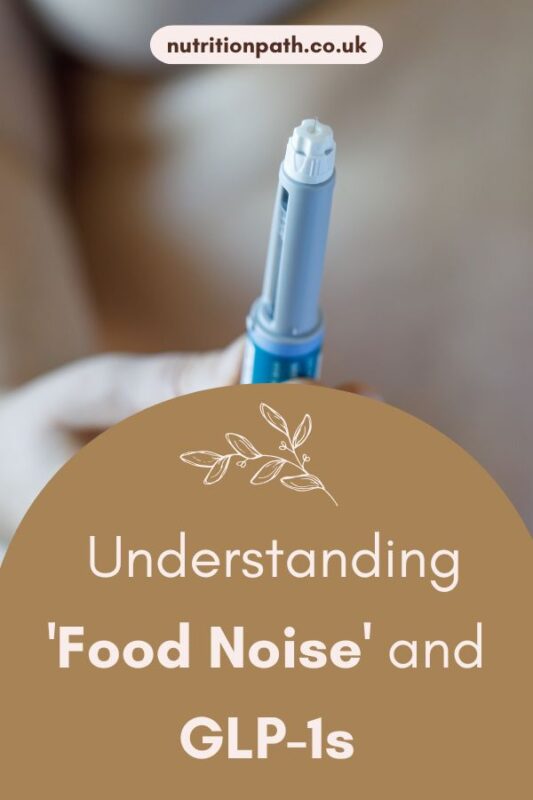
This is where medications like Semaglutide (Ozempic/Wegovy) and Tirzepatide (Mounjaro/Zepbound) enter the conversation. These aren’t just “weight loss jabs”; they are metabolic tools that cross the blood-brain barrier to interact with the central nervous system.
Emerging evidence suggests that GLP-1 receptor agonists can suppress dopamine signaling in reward circuits, effectively lowering the “volume” on cravings (PMC, 2024). For many of my clients, this is the first time they have ever experienced a “quiet” brain.
Clinical Note:While medication provides a biological “mute” button, a 2025 systematic review notes that these tools work best as a support to existing additions like therapy and nutritional support. While the meds handle the biology, we still need to address the underlying emotional triggers and change of eating habits to ensure long-term recovery after stopping the medication.
How GLP-1 for Binge Eating Affect the ADHD Brain
As a nutritional therapist specialising in ADHD, I see a significant overlap between neurodivergence and binge eating, read more about it here. The ADHD brain is naturally “dopamine-seeking” due to lower levels of dopamine. Because food and specifically high-sugar or high-fat food provides an immediate hit of dopamine, it often becomes a primary tool for self-medication.
Research indicates that GLP-1 receptors are highly concentrated in the mesolimbic reward system—the brain’s “hub” for dopamine and impulsivity (PMC, 2025). For those with ADHD, the “brakes” (executive function) are often weaker, while the “gas pedal” (the urge for a reward) is much stronger. This makes food noise feel even louder, as the brain views eating as a way to regulate restlessness and focus.
The Science of Appetite: How Weight Loss Meds Interact with the Binge Brain
In my clinical practice, I often hear clients describe the experience of starting these weight loss jabs as “a light switch being flipped” and they often say “that’s how everyone else must be feeling”. To understand why that happens, we have to look past the “weight loss” label and into the complex hormonal signaling between the gut and the brain.
How Semaglutide (Ozempic/Wegovy) Regulates Hunger Signals and Satiety
Semaglutide (the active ingredient in Ozempic and Wegovy) is a GLP-1 receptor agonist. GLP-1 (Glucagon-Like Peptide-1) is a hormone your body naturally produces in the gut after you eat. Its job is twofold: it tells your pancreas to release insulin and signals your brain that you are satiated.
However, for those struggling with chronic binge eating, these signals can become “muffled.” Research suggests that GLP-1 medications work by crossing into the hypothalamus, which is the brain’s metabolic control center to artificially sustain that “full” signal. This effectively slows down gastric emptying, keeping food in the stomach longer, which provides a physical barrier to the “bottomless pit” feeling often associated with a binge.
Tirzepatide (Mounjaro) vs. Semaglutide (Ozempic) for Binge Eating: What’s the Difference?
While Ozempic mimics one hormone, Tirzepatide (Mounjaro/Zepbound) is a “twincretin.” It mimics both GLP-1 and GIP (Glucose-dependent Insulinotropic Polypeptide).
Why does this matter for binge eating?
While GLP-1 focuses heavily on satiety, GIP is thought to act more directly on how the brain processes energy and fat storage. A 2024 study in The Lancet indicates that this dual-action approach may lead to even greater reductions in “food noise” than GLP-1 alone. For many of my clients, Mounjaro seems to provide a more profound sense of metabolic stability, making the “urge” to use food as an energy crutch significantly less intense.
Comparison: GLP-1 and Dual-Agonist Medications for Binge Eating
| Feature | Semaglutide (Ozempic / Wegovy) | Tirzepatide (Mounjaro / Zepbound) |
| Drug Class | Single Agonist (GLP-1) | Dual Agonist (GLP-1 + GIP) |
| Primary Brain Target | Hypothalamus (Satiety Center) | Hypothalamus + Mesolimbic (Reward Center) |
| Mechanism of Action | Slows gastric emptying; signals “fullness” to the brain. | Regulates insulin, slows digestion, and modulates dopamine signaling. |
| ADHD-Specific Benefit | Helps bridge the gap in executive function by reducing impulsivity. | Often reported as more effective for the “dopamine-seeking” aspect of ADHD. |
| Common Side Effects | Nausea, reflux, fatigue, slowed digestion, constipation and stomach pain. | Nausea, diarrhea, decreased appetite, vomiting, constipation, indigestion, and stomach pain. |
The Neurobiology of Food Noise: How Weight Loss Meds Rewire the Reward Center
Perhaps the most interesting aspect of these weight loss jabs is their impact on the mesolimbic dopamine system, which is the brain’s reward highway. This is the area of the brain that “lights up” when we anticipate a binge happening.
In the brain of a person who binge-eats, the “reward” or “incentive salience” of food is often hyper-amplified. Research published in BioScientifica confirms that GLP-1 receptors are located directly in the Ventral Tegmental Area (VTA) and the Nucleus Accumbens—the parts of the brain that control “wanting” and “craving.”
By dampening the dopamine “hit” we get from a binge, these medications can effectively decondition the brain’s reliance on food for pleasure. This “rewiring” is what creates the absence from “food noise” many of my clients describe—the food is still there, but the urgent, magnetic pull toward it has been somewhat neutralised.
Navigating the Risks: When Appetite Suppression Meets Binge Eating Recovery
Here’s the thing, for a lot of people I see in my nutrition therapy clinic, starting a GLP-1 jabs feels like finally switching off the mental chatter around food and finally being able to go around their day and food like a “normal” person. But for those of us navigating the complexities of binge eating, this sudden absence of hunger brings its own set of quiet challenges.
The biggest risk is something that can be called a “silent restriction.” When the medication mutes your stomach’s physical hunger cues, it’s easy to accidentally slip into a state of under-fueling, which can be mimicking the very restrictive patterns that often trigger a binge cycle in the first place. If you find yourself cruising through the day on minimal fuel simply because you don’t “feel” hungry, your survival brain may eventually override the medication, leading to a confusing and demoralising “breakthrough binge”, influenced by a genuine biological need for energy.
This shift becomes even more delicate when we factor in physical side effects like nausea or reflux. For a brain that has a complicated relationship with fullness, these sensations can feel like a “sign” to avoid food altogether, unintentionally reinforcing a fear of eating. It’s a bit of a paradox: to truly heal, we have to stay proactive with our nutrition and familiarise ourselves with food even when our appetite isn’t prompting us to.
We also have to be incredibly protective of your physical strength. When we lose weight too rapidly, the body often pulls from its muscle stores— the very engine of our metabolic and psychological stability. If we lose that “lean mass” too quickly, the body begins to feel “threatened” and depleted, which can eventually ramp up the biological drive to binge as a form of self-preservation.
Real, lasting recovery isn’t about how little you can eat; it’s about using this medication as a tool to support your body to relearn food and habits that support you long term. It’s about teaching your system that it is safe, strong, and well-fueled enough to finally let go of the binge cycle for good.
Can Weight Loss Meds Actually Trigger a Binge?
It feels like a cruel irony: the very tool meant to quiet the “food noise” can, in some cases, lead to a breakthrough binge. This usually happens when the medication works, but it suppresses appetite beyond the signals that the body would send. Then the lack of appetite gets mistaken for a lack of nutritional need. This is also what side effects, such as hair loss, weakness and fatigue can come into play.
When we go long stretches without nourishing our bodies because the “hunger signal” is muted, we aren’t actually eliminating the binge cycle long term; we can either put a “pause” on the cycle until we are on medication OR we can accidentally mimic the restrictive phase of it.
Your brain is incredibly smart—if it detects a significant energy deficit, it will eventually flip a survival switch that no medication can fully override. This “biological hunger” can hit all at once, leading to a restart of the binge cycle even when on medication, or can come back with a vengeance when finishing weight loss medication, if binge eating patterns have not been addressed separately.
It’s not that the medication failed; it’s that your body is trying to protect you from what it perceives as a famine. This is why, in my practice, we focus on “mechanical eating”— nourishing your body on a schedule and giving it enough nutrition and the right foods to ensure it feels safe enough to keep the binge-drive turned off.
The “Rebound” Reality: What Happens After You Stop GLP-1 Medications?
One of the most common anxieties I hear in my clinic is: “Am I going to be on this forever? And if I stop, will the binges come back even worse?” It’s a valid fear. If we use these medications solely as a “pharmacological bypass” for our hunger without addressing the underlying emotional, behavioural, habitual or ADHD-driven triggers, the risk of a rebound is real. When the medication is tapered off, the “food noise” doesn’t just return; it can feel amplified because the brain has to relearn how to navigate hunger and fullness cues that have been silenced for months, sometimes even years.
The “rebound” often happens not because of a lack of willpower, but because the biological “brakes” the medication provided have been removed before the passenger (your brain) learned how to drive. If we haven’t spent our time on the medication building a solid foundation of consistent nourishment, habit change and emotional regulation, the return of dopamine-seeking behavior can feel overwhelming. My goal is to help you use the pause from food noise provided by the medication to build a robust set of skills, so that if and when you decide to stop, your brain isn’t left scrambling for the nearest dopamine hit to feel safe again.
If those tools are not rebuilt properly, or the person is severely undereating during the time of taking the medication, the process of being on medication and then being off can create the same pattern as binge eating and restriction.

A Clinical Partnership: Why Medication is a Tool, Not a Total Solution
It is helpful to think of GLP-1 for binge eating as a high-tech “crutch” for a broken leg. The crutch is essential as it takes the weight off the injury so that the bone can knit back together, but the crutch itself doesn’t do the physical therapy. In the context of binge eating, weight loss and ADHD (if present), the medication does the heavy lifting of silencing the intrusive thoughts about food, but it doesn’t teach us how to cope with a stressful workday, how to navigate binge urges when they arise, or how to regulate the overstimulated nervous system.
True, sustainable recovery happens in the partnership between the clinical tool and the therapeutic work. While the medication handles the food noise, we work together on the consistency and understanding of nutrition, like meal prepping for success or identifying the emotional “voids” that food used to fill. By treating the medication as a supportive partner rather than a total solution, we ensure that you aren’t just “not binging,” but that you are actually building a life where food no longer feels like the only way to regulate your nervous system, long-term.
Ready to Move Beyond the “Food Noise”?
If you are navigating the complex intersection of binge eating, GLP-1 medications or perhaps also have ADHD or are neurodivergent, you don’t have to do it alone. If you want to take the opportunity of using weight loss medication and change your relationship with food and habits for good, I am here to help.
👉 Check out my Food Peace Program to see how we can rewire your relationship with food, or if you’re ready to see if we’re a good fit, you can Book a Free Discovery Call today. Let’s turn the absence of food noise into a solid (and lasting) foundation for your recovery.

Frequently Asked Questions About Ozempic, Mounjaro and GLP-1 for Binge Eating
-
Does Ozempic stop “food noise” permanently?
While using GLP-1 for binge eating is highly effective at reducing or eliminating food noise while you are taking it, the effect is typically pharmacological. If the medication is stopped without addressing the underlying emotional triggers, ADHD-related impulsivity, or restrictive eating patterns, the food noise often returns. Success lies in using the “quiet” period to build sustainable nutritional habits.
-
Can you still binge while taking Mounjaro or Wegovy?
Yes, it is possible to experience a “breakthrough binge” on these medications. This often happens due to “silent restriction”—where the medication suppresses your appetite so much that you under-fuel your body. Eventually, your survival brain overrides the medication to demand energy, leading to a binge driven by biological hunger rather than just a craving.
-
Are weight loss medications the answer for Binge Eating Disorder (BED)?
GLP-1 for binge eating are powerful tools for managing the physiological urges associated with BED, but they are not a standalone solution. Because binge eating often has roots in emotional regulation, nutritional dysregulation, neurodivergence (like ADHD), and past dieting trauma, the most effective approach is a clinical partnership that combines medication with nutritional therapy and psychological support.
-
What happens to your appetite after stopping GLP-1 or combined weight loss medications?
When you taper off GLP-1s, your natural hunger signals and “food noise” will likely return. Without a foundation of “mechanical eating” and stabilised blood sugar through nutrition, this return can feel overwhelming. Working with a nutritional therapist ensures you have the executive functioning skills to manage your appetite once the medication’s support is removed.
-
Who should be cautious when considering GLP-1 medications for binge eating?
While these medications show promise for “muting” the physiological urge to binge, they are not suitable for everyone. Individuals with a history of restrictive eating disorders (like Anorexia or Bulimia), those currently under-fuelling, or people who struggle to maintain adequate protein and muscle mass should proceed with extreme caution. It is essential to have a comprehensive screening for disordered eating and a solid nutritional plan in place before starting.
References and Further Reading:
Tongta, S., Sungkaworn, T., & Pathomthongtaweechai, N. (2025). Neurobiological Mechanisms and Therapeutic Potential of Glucagon-like Peptide-1 Receptor Agonists in Binge Eating Disorder: A Narrative Review. International Journal of Molecular Sciences, 26(22), 10974. https://doi.org/10.3390/ijms262210974
Balantekin, K. N., Kretz, M. J., & Mietlicki-Baase, E. G. (2024). The emerging role of glucagon-like peptide 1 in binge eating. The Journal of endocrinology, 262(1), e230405. https://doi.org/10.1530/JOE-23-0405
Aoun, L., Almardini, S., Saliba, F., Haddadin, F., Mourad, O., Jdaidani, J., Morcos, Z., Al Saidi, I., Bou Sanayeh, E., Saliba, S., Almardini, M., & Zaidan, J. (2024). GLP-1 receptor agonists: A novel pharmacotherapy for binge eating (Binge eating disorder and bulimia nervosa)? A systematic review. Journal of clinical & translational endocrinology, 35, 100333. https://doi.org/10.1016/j.jcte.2024.100333
Krupa A. J. (2025). Curbing the appetites and restoring the capacity for satisfaction: The impact of GLP-1 agonists on the reward circuitry. Neuroscience applied, 4, 105512. https://doi.org/10.1016/j.nsa.2025.105512
Skibicka KP (2013) The central GLP-1: implications for food and drug reward. Front. Neurosci. 7:181. doi:10.3389/fnins.2013.00181
Garvey W, Frias J, Jastreboff A et al.
Tirzepatide once weekly for the treatment of obesity in people with type 2 diabetes (SURMOUNT-2): a double-blind, randomised, multicentre, placebo-controlled, phase 3 trial The Lancet, 2023; 402, 613-626; https://www.thelancet.com/journals/lancet/article/PIIS0140-6736(23)01200-X/abstract
Balantekin, K. N., Kretz, M. J., & Mietlicki-Baase, E. G. (2024). The emerging role of glucagon-like peptide 1 in binge eating. The Journal of endocrinology, 262(1), e230405. https://doi.org/10.1530/JOE-23-0405