


Written by Milda Zolubaite MSc Nutritional Therapist with 9 years of experience helping adults overcoming binge eating , disordered eating and improve ADHD symptoms. In the UK and globally online.
The ADHD afternoon slump refers to a predictable drop in energy, focus and motivation that typically occurs between 2–4 pm. It’s driven by changes in dopamine levels, blood sugar fluctuations and mental fatigue, and often leads to sugar cravings, brain fog and reduced productivity.
Another afternoon in the office and 3-4 pm the kettle is on and packs of biscuits and chocolates are out. Trust me, it’s not just your office- it’s the majority of offices/ homes around the world that have an abundance of sugary treats to get through the lull of the day when the afternoon energy crash hits.
Yes, the ‘afternoon slump’ is a thing. It’s a universal, international and a very common ‘thing’. Yet, due to specific factors for ADHD such as sensitivity to blood sugar imbalances, wear off from sugar and stimulants that enhance dopamine and time when mediation wears off (if you’re taking ADHD medication), ADHDers tend to feel the afternoon crash strongly.
The good news is, even small adjustments to your nutritional choices, structure of your meals and timing can help avoid the ADHD afternoon slump, help naturally reduce sugar cravings and improve focus.
Here are 4 of my favourite go-to options to bust the afternoon slump whether you have ADHD or not. The majority of my ADHD clients in my UK- and online-based international clinic notice a clear reduction in cravings within a couple of weeks of implementing these changes. And if you’d like some solid tips on how to eat regularly with ADHD, check out my extensive blog post on the topic.
The ADHD afternoon slump refers to a predictable drop in energy, focus and motivation that typically occurs between 2–4 pm. It’s driven by changes in dopamine levels, blood sugar fluctuations and mental fatigue, and often leads to sugar cravings, brain fog and reduced productivity.
- 🧠 ADHD Afternoon Slump: What’s Really Happening?
- What should I eat during an ADHD afternoon slump?
- 1. Protein for ADHD Focus & Craving Control
- 2. Fats for Satiety & Brain Energy
- 3. Stabilise Energy Instead of Chasing It
- 4. Colour for ADHD Brain Fog & Focus
- The Bottom Line
- FAQs on What to Eat for the ADHD Afternoon Slump
Why the Afternoon Slump Hits Harder With ADHD
For many people with ADHD, the mid-afternoon slump isn’t just “normal tiredness” — it reflects how the ADHD brain uses energy and dopamine differently. Research shows that dopamine signalling — the neurochemical system involved in motivation, reward and focus — is altered in ADHD, which can make sustained attention and drive harder to maintain as the day progresses. In both human and animal studies, dopamine pathways in ADHD brains have functionally different responses compared with non-ADHD individuals, contributing to fluctuations in focus and reward-seeking behaviour throughout the day.
At the same time, glucose metabolism — how the brain uses blood sugar for fuel — can also be less efficient in ADHD, especially during tasks requiring sustained attention. Neuroimaging studies have found lower glucose metabolism in regions of the brain responsible for executive function and sustained focus, such as the prefrontal cortex, which can contribute to energy dips and mental fatigue later in the day.
These biological patterns help explain why a fast hit of sugar or caffeine may momentarily feel helpful but often leads to a bigger crash afterwards— the dopamine and glucose systems are already working differently, so the temporary boost is followed by a more significant drop. Regular intake of balanced fuel — including protein and complex carbohydrates — supports more stable neurotransmitter production and blood sugar levels, which can reduce the severity of afternoon energy slumps.
In addition, ADHDers may already struggle with decision fatigue, which only intensifies as the day goes on and further decisions and choices need to be made. Let’s not forget that many people are taking ADHD medication for focus and executive functioning enhancement. The afternoon and early evening is when the medication normally starts to wear off, creating a wave of tiredness.

Why Sugar & Caffeine Make ADHD Energy Crashes Worse
For many ADHDers that come to my nutritional therapy sessions caffeine and sugar have become irreplaceable crutches that help boost energy and give the so-much-needed push to help finish the working day.
ADHDers already have systems that are very sensitive and dysregulated, in turn creating higher spikes and crashes of blood sugar. And while caffeine and sugary foods may give the instant dopamine hit, the effects are short-lived and create a bigger, more pronounced spike later.
Higher blood glucose spikes and crashes can then lead to bigger afternoon slump or even turn into evening cravings and binges. Find out more on how to overcome binge eating here.

4 ADHD-Friendly Foods to Beat the Afternoon Slump
In my nutritional therapy practice, I see afternoon energy crashes especially often in adults with ADHD and binge–restrict cycles. And yet, these simple yet effective adjustments can be instrumental in increasing energy and eliminating sugar cravings.
1. Protein for ADHD Focus & Craving Control
Go for foods high in protein, as this will help balance blood sugar, help you restore energy faster and make you feel more balanced and resilient in no time. When sugar cravings hit, just the thought of having ‘a balanced, nutritious snack’ (when all you can think of is an Oreo) can feel a little out of place. Here, preparation is key.
Choose a boiled egg or hummus with vegetable sticks, chicken slices with cherry tomatoes, miso soup with tofu or a few sushi rolls. Many supermarkets now have prepped protein pots to go, which can also be an easy option when you’re out. In practice, I often see that when ADHD clients add a protein-based snack around 3-4 pm, evening cravings reduce noticeably within 1–2 weeks.
If you’re short on time (or forgot to prep — it happens), keep a few easy protein options on hand. Natural protein bars or natural single-serve protein powder sachets are easy to store in a bag or desk drawer and can be a real lifesaver on busy afternoons. Choosing flavours you genuinely enjoy also helps, especially if variety keeps your ADHD brain engaged.
2. Fats for Satiety & Brain Energy
If you’re familiar with the feeling of saying ‘I’ll just have one’ and then feeling guilty and disappointed a whole pack of digestive biscuits later, this one is for you.
Do you notice how it’s oh too easy to drink a full bottle of fizzy drink and leave wanting more? Now imagine drinking the same amount of Greek yoghurt- could you do it?
Our bodies are designed to send us satiety signals when we eat fats, however the body is unable to recognise sugar in the same way and doesn’t send satiety signals, leaving us wanting more and more and more.
So opt for foods high in fats and you’ll eliminate cravings, feel fuller for longer and the afternoon slump slowly will become a thing of the past. In my practice clients often report a noticeable reduction in cravings and better focus within weeks when also adding fats, as well as protein to their snacks.
Choose olives and dips like guacamole or tzatziki, a chunk of cheese with cucumber, oatcakes or a sliced fruit with nut butter, coconut yoghurt or full fat Greek yoghurt with seeds.
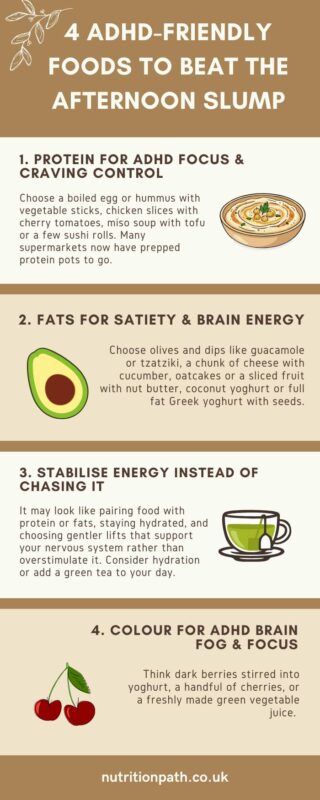
3. Stabilise Energy Instead of Chasing It
When the ADHD afternoon slump hits, the instinct is often to reach for another coffee out of habit and carry on surfing the spikes and crashes of imbalance for the rest of the day. For many ADHDers, caffeine (and especially coffee) temporarily boosts focus but often leads to more irritability, cravings, and mental fatigue.
Instead of chasing energy spikes, focus on stabilising your energy. It may look like pairing food with protein or fats, staying hydrated, and choosing gentler lifts that support your nervous system rather than overstimulate it. Matcha, for example, contains caffeine but also L-theanine, which many people with ADHD find gives a smoother, calmer focus and more alertness for longer periods of time.
Think of herbal tea options, hydration and mineral-rich drinks can also help support energy without pushing your system into overdrive. ADHD client in my nutritional therapy clinic often notice big changes in energy and focus in a week or so simply by increasing daily hydration.
4. Colour for ADHD Brain Fog & Focus
You just need to take a look around the office 3-4 pm and it’s quite easy to recognise that concentration levels have massively dropped since the morning. Your brain is most likely feeling a little tired by now and it’s a perfect time to give it some different fuel.
This is a great time to move away from beige snacks and add more colour instead. Colourful foods are rich in phytonutrients — plant compounds that support brain function, mental clarity, and resilience to stress. The more drained or foggy you feel, the more your brain benefits from foods that are vibrant and nutrient-dense.
Think dark berries stirred into yoghurt, a handful of cherries, or a freshly made green vegetable juice. These kinds of foods can help steady energy, support focus, and often reduce the urge to reach for something sugary “just to keep going”.
You can read more on essential nutrients for the ADHD brain in this post.
The Bottom Line
Afternoon energy crashes and sugar cravings often call for a better nourishment, fuel that’s more stable and change in meal structure and timing, NOT more willpower. Supporting blood sugar balance, neurotransmitter production (more dopamine?) and brain function through food can help reduce those 3–4pm dips and improve focus, mood and productivity — especially for ADHD and neurodivergent brains.
These strategies are simple, practical and evidence-informed, and when used consistently, they can help break the daily habitual cycle of spikes, crashes and cravings. And if you’re struggling to implement these changes without extra accountability and expert support, find out if working with an experienced ADHD nutritional therapist could help you feel more balanced and energised.

FAQs on What to Eat for the ADHD Afternoon Slump
-
Why do people with ADHD feel more tired in the afternoon?
People with ADHD often experience sharper drops in dopamine and blood sugar in the afternoon, which can reduce focus, motivation and mental energy. This makes the brain seek quick stimulation or fast energy, often in the form of sugar or caffeine.
-
Why do ADHD brains crave sugar around 3–4pm?
Sugar provides a fast dopamine and glucose boost, which temporarily improves energy and focus. For ADHD brains that already struggle with dopamine regulation, this makes sugary snacks especially tempting during afternoon dips.
-
What is the best afternoon snack for ADHD energy and focus?
The best afternoon snacks for ADHD combine protein, healthy fats and fibre, such as eggs, yoghurt with seeds, hummus with vegetables or nut butter with fruit. These help stabilise blood sugar and support steady energy without crashes.
-
Can protein help reduce afternoon sugar cravings?
Yes. Protein supports dopamine production and slows blood sugar spikes, which can significantly reduce cravings for sweets and improve sustained focus in the afternoon.
-
Can afternoon eating habits affect evening binge eating?
Yes. Skipping protein or relying on sugar in the afternoon can increase hunger, fatigue and cravings later in the day, making evening overeating or binge eating more likely.
References and further reading
- MacDonald, H. J., Kleppe, R., Szigetvari, P. D., & Haavik, J. (2024). The dopamine hypothesis for ADHD: An evaluation of evidence accumulated from human studies and animal models. Frontiers in psychiatry, 15, 1492126. https://doi.org/10.3389/fpsyt.2024.1492126
2. ADD Resource Center (2025). Introduction to ADHD and glucose metabolism. ADD Resource Center. https://www.addrc.org/introduction-to-adhd-and-glucose-metabolism/ addrc.org
3. Envision ADHD (2026). How blood sugar spikes and crashes affect ADHD symptoms — and what to do about it. Envision ADHD. https://www.envisionadhd.com/single-post/how-blood-sugar-spikes-and-crashes-affect-adhd-symptoms-and-what-to-do-about-it
4. Baba, Y., et al. (2020). Effects of l-theanine on cognitive function in middle-aged and older subjects: A randomized placebo-controlled study. Journal of Medicinal Food.https://pubmed.ncbi.nlm.nih.gov/33751906/
5. Author(s) not listed. (2021). The effects of twenty-one nutrients and phytonutrients on cognitive function: A narrative review.PubMed.https://pubmed.ncbi.nlm.nih.gov/34541370/