


Written by Milda Zolubaite MSc Nutritional Therapist with 9 years of experience helping adults overcoming binge eating and eating disorders and improve ADHD symptoms. In the UK and globally online.
Do you struggle to get through the day without sugar? Perhaps your lunch or dinner doesn’t feel complete without ‘something sweet’ after it? Or maybe, you just can’t stop with one piece of chocolate once you start?
If that sounds like you, you’re definitely not alone. This is a story I hear from my clients daily in my Nutritional Therapy Clinic.
A recent survey of 9317 Americans found that around 82% of people regularly exceed the daily recommended 10% of calories from sugar!
Scientists have long discussed the effects of sugar as addictive and compared it to drug substances, such as cocaine.
However, recent research shows that excessive sugar intake activates the reward pathway in the brain due to its palatability. That means that physiologically it is slightly different to food addiction.
If you’re no stranger to daily sugar cravings and you are ready to find out how to stop binging on sugar, keep reading. I will share some simple effective strategies to help stop sugar binges from my UK and online (internationally) Nutritional Therapy Clinic. You will also figure out what to do after a sugar binge to support your mental health.
Whether your goal is to stop sugar cravings, understand why they happen, or finally get out of the binge–restrict cycle, this guide walks you through the science-backed steps that help my clients stop binging on sugar for good.
How Sugar Causes Cravings and Binges (Science Explained Simply)
Want to find out how to stop sugar binges or what to do after a sugar binge? Then it’s key to learn to recognise the effects of sugar and how it actually works on the body.
When you eat, your body releases insulin to manage blood sugar levels and energy. If you consume too many processed sweet treats, especially with a lack of protein or fibre, the blood sugars spike and crash, creating further sugar cravings.
Sugar not only influences insulin but also messes with important hunger hormones in your body including leptin and ghrelin.
Leptin, also known as the hormone of satiety, signals to your brain when you’ve eaten enough. Excessive sugar consumption can lead to leptin resistance. Which is when the brain no longer gets the accurate signal to stop eating and that can lead to overeating and weight gain.
Ghrelin, your hunger hormone stimulates appetite and increases food intake. Consuming high-sugar foods can influence ghrelin levels to stay high, promoting constant hunger. And that’s even when you’ve had enough calories.
Over time this can lead to being “overweight, but malnourished” and feeling hungry most of the time. You may also experience constant sugar cravings.
Binging on sugary foods can disrupt the delicate balance hunger and fullness hormones. In turn, it perpetuates a vicious cycle of constantly high cravings and binges.
What’s more is that the consumption of high sugar foods may override the hunger-satiety signals. And that can lead to the inability to accurately assess hunger and fullness, increasing sugar binges.
The Real Reasons You Binge on Sugar (Triggers You Must Know)
The first step to ending the cycle of sugar cravings is to notice when and why you’re experiencing cravings in the first place. To find out how to stop binging on sugar, you first need to get clear on what’s driving the process.
Are the sweet food cravings caused by stress, boredom or hormones? Or perhaps it’s purely habitual?
What’s causing sugar cravings will vary from person to person, so it’s important to recognise what the main triggers for you are.
In my UK and online Nutritional Therapy clinic, I see 3 main trigger types that create sweet cravings the most: physical, emotional and habitual.
Physical cravings are mostly influenced by blood glucose dysregulation, irregular meals and chaotic mealtimes, lack of adequate nutrition, restricting food intake, fasting, etc. Honestly, physical cravings are the most common I see in my practice. However, my clients usually are unaware of the power physical cravings have and think their cravings are MUST be emotional.
Emotional cravings are linked to stress, anxiety, loneliness, boredom and a range of emotions. In fact, this can also be positive emotions and seeking reward that can influence sugar binges. Some of my clients report that they binge on sugar when they are down or bored. But also, turn to sugar to celebrate or when they feel good.
Lastly, habitual cravings are mostly influenced by learned behaviour from childhood. Or old habits that you just can’t seem to shake off, like Friday night chocolate and wine.
Have no clue where to even start or how to recognise your main triggers? It can be a good idea to start a food journal and take notes of situations, feelings and events that lead to the sugar habit.
Is emotional eating the same as sugar addiction?
No. Emotional eating is a coping mechanism or is present due to physical and emotional imbalances. Restriction + dopamine reward loops can mimic addiction, but sugar is not chemically addictive like drugs.
➡️ Also read my other posts on specific challenges with sugar cravings and binge eating, such as Nighttime Binge Eating and Fog and Storm Eating.

9 Proven Strategies to Stop Binging on Sugar (Therapist-Backed)
If you’re struggling with sweet cravings and sugar binges, make sure you’re working on noticing and reducing your potential triggers. And keeping yourself well nourished.
These simple, yet effective strategies can help you figure out how to stop binging on sugar for good. And effortlessly reduce your sugar intake.
1. Don’t Skip Breakfast
A solid nourishing breakfast packed with whole foods, slow-release carbohydrates and protein will help to keep your blood sugar level stable. And help reduce sweet cravings later in the day.
Some of my clients’ absolute favourites include scrambled eggs with rye bread, tomato and spinach; egg omelette with bell peppers, spring onions and feta or protein pancakes with nut butter and berries.
Often people, who don’t have a nourishing breakfast think they have a real sweet tooth. That’s because sweet cravings start in the early morning.
Even if you’re not a big morning person, aim to have breakfast 1-2 hours after waking up to help you reduce the urges and help stop sugar binges.
2. Choose Complex Carbs
Choose complex carbohydrate foods instead of simple carbohydrates like white pasta, white bread, and white rice.
Complex carbohydrates provide the body with slow-release energy that keeps blood sugar levels stable. They also help prevent blood sugar spikes.
Choose whole grains such as quinoa, buckwheat, oats, wild rice, red rice and black rice to start with.
3. Eat Regularly Throughout the Day
Eating regularly throughout the day will help balance blood sugar levels and avoid the spikes and crashes (as well as sweet cravings).
Regular eating will also help manage your hunger hormones, leptin and ghrelin, so you don’t get too hungry. This means that overwhelming sweet cravings are less likely to happen.
The absolute majority (95%) of clients in my practice see a huge improvement in their cravings once they start eating regularly. So make sure you don’t skip this step, it’s essential!
4. Prioritise Protein
Eating an adequate amount of protein in your meals and snacks will help you to feel fuller for longer and will help you balance hunger.
If you’re experiencing sweet cravings regularly, make sure you add quality protein to each of your meals. Choose poultry, eggs, fish and seafood, dairy or add beans, nuts and seeds or tofu if you’re vegetarian or vegan.
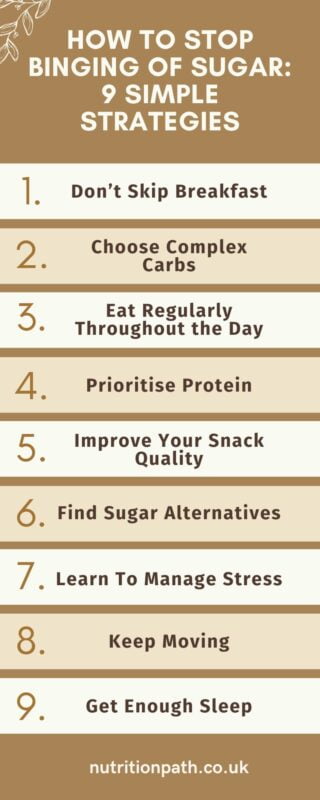
5. Improve Your Snack Quality
When cravings hit, make sure you’re reaching for nutritious snacks that will fill you up rather than processed sugary snacks that will boost those sugar cravings further.
Choose a homemade trail mix with nuts and seeds, a piece of fruit with nut butter (almond butter and raspberries are my favourite) or hummus with vegetable sticks.
6. Find Sugar Alternatives
Instead of habitually reaching for the white refined sugar in your tea or golden syrup for your porridge to satisfy cravings, choose other options that include less simple sugars and may not trigger your blood glucose level as much.
Keep in mind that there are ~60 legal names for sugar allowed on the label in the UK alone. So also watch out for hidden sugars that may sneak into what looks like “healthy food options”.
Sweeten your food with natural sugars: apple puree, crushed fresh berries, cinnamon or maple syrup. Try stevia as an alternative natural sweetener to help you lower sources of sugar in your diet.
7. Learn To Manage Stress
Stress is no doubt one of the major triggers for cravings. It may be, that your sugar cravings come during stressful times to help you soothe and find comfort.
However, during stressful periods cortisol increases. And that can lead to increased hunger and blood sugar spikes and crashes.
Find one or two stress management techniques that work for you, such as regular meditation, mindfulness or breathing techniques. Even a simple regular walk in nature to let off some steam and avoid those sweet cravings.
Also, aim to eat slowly and mindfully, chew well to avoid overeating, rushing and having more sugar from the momentum of eating.
8. Keep Moving
Exercise is a great way to reduce stress and increase endorphins to help you feel positive and resilient. Regular movement can also help stabilise your blood glucose levels, reducing overall cravings.
Set aside at least 15- 30 minutes of some form of physical activity 3-4 times a week, even if it’s just taking a brisk walk.

9. Get Enough Sleep
An often overlooked, but a super important element of keeping sugar cravings at bay.
Too little or disturbed sleep can lead to blood sugar dysregulation and increased sugar cravings. So make sure you are getting at least 7-8 hours of uninterrupted sleep every night.
What to do after a Sugar Binge
Okay, so you started to pay more attention to the triggers of your cravings. You started to nourish yourself well and you sugar cravings are decreasing.
But then, another sugar binge happened!
Stay calm and keep in mind that sugar binges may sometimes be led by pure habit. Firstly, forgive yourself, try and figure out what happened and aim to prevent this in the future.
In the meantime, here’s what to do after a sugar binge:
1. Acknowledge and Accept – Allow yourself to feel what you are feeling without judgement or self-criticism. Recognise that everyone overeats sometimes and it is just a normal part of life.
However, perhaps it’s making you feel miserable every time it happens? Or you need solid guidance and strategies on what to do after a sugar binge for your unique situation? Then, perhaps working with a Nutritional Therapist could be helpful.
2. Stay Hydrated – Drink plenty of water to help your body detoxify, replenish minerals and reduce feelings of fatigue. Infuse a glass of water with lemon, cucumber and mint for extra taste and hydration.
3. Nourish Yourself– while the temptation to skip dinner, restrict your food intake or cut carbs out may sound like a good idea, aim to keep yourself regularly nourished and help your blood glucose rebalance.
Even if your next meal is slightly smaller than what you would have if sugar binges hadn’t happened, still aim to have that meal. Make sure you include a source of quality protein. Also, think of adding some wholesome fibre in the form of rainbow veg for the next meal.
4. Move Your Body – Movement can be a great way to change your state and help get out of the negative thought cycle. Aim to move your body in whatever way feels good for you and feels like self-care- yoga, dancing or walking.
5. Reframe the Experience– Reframe the experience by acknowledging that you learnt something from it. Identify what happened, possible triggers and steps to take to prevent this type of behaviour in the future.
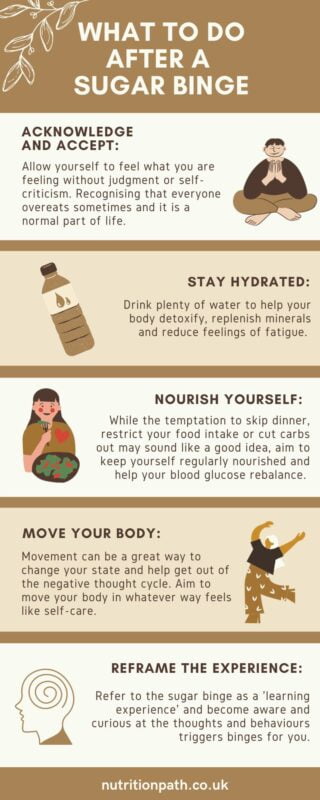
Refer to the sugar binge as a ‘learning experience’ and become aware and curious at the thoughts you may have that follow and what behaviours this triggers.
Use this list of what to do after a sugar binge as a list of useful strategies to implement. However, there are a few things you also want to avoid after a sugar binge. Such include criticising and beating yourself up, punishing yourself for the calories eaten or trying to compensate for the sugar binge. This will further the negative effects on the mind and body.
How to Stop Binging on Sugar if These Strategies Don’t Work
Ok so you’ve already tried to track your triggers and follow the above strategies to stop the sugar cravings. But you still keep constantly getting into the sugar trap and keep binging. In that case, it could be useful to get some help with your food habits.
Working with a Nutritional therapist can help you figure out and address your sweet cravings, as well as help you relearn how to nourish yourself well. It may help reconnect with your hunger and fullness signals, so you’re in control of sugar cravings, for good.
Final Thoughts on How to Stop Binging on Sugar
There is no one-size-fits-all solution when it comes to overcoming sugar binges and reclaiming food freedom. However, the strategies listed above can help you better understand your sugar cravings, exactly what to do after a sugar binge and what useful skills are needed to cope with sugar cravings long term.
Taking control of your cravings is possible regardless of how long it’s been an issue. You just need the right tools and support to do it. Take action now and remember that the first steps are the hardest towards lasting food freedom!
FAQs on How to stop binging on sugar
-
Why do I have intense sugar cravings that lead me to binge?
Intense sugar cravings usually come from blood sugar swings, irregular meals, undereating, or stress. When blood glucose drops too low, the brain signals an urgent need for fast energy — and sugar becomes the quickest fix. Emotional triggers such as anxiety, boredom, or reward-seeking can also amplify the urge to binge.
-
Is sugar addiction real, or is it something else?
Sugar doesn’t create a true physiological addiction like drugs, but it activates the brain’s reward pathways, creating a habit-reward loop that feels addictive. Most people struggle with cravings due to blood sugar dysregulation, emotional triggers, and restriction, not addiction.
-
How long does it take to stop sugar cravings?
Most people notice fewer cravings in 3–7 days once blood sugar stabilises, and significant improvement within 2–4 weeks of regular eating. Emotional and habitual cravings may take longer but typically improve with consistent habits and support.
-
Why do I binge on sugar even when I’m not hungry?
This usually happens when sugar is used for emotional regulation, reward, stress relief, or habit reinforcement. Your brain associates sugar with comfort and predictability, so it triggers cravings even without physical hunger.
-
Is it normal to binge after trying to cut sugar out?
Yes — restricting sugar or avoiding entire food groups increases the brain’s reward response and intensifies cravings. This can lead to a binge-restrict cycle. A more balanced approach reduces the urge to binge over time.
-
Can ADHD make sugar cravings stronger?
Yes — ADHD brains have differences in dopamine regulation, which can increase reward-seeking behaviour, including sugar. Irregular eating, impulsivity, and stress can also intensify cravings if ADHD is present. Read more on ADHD and sugar cravings here.
References (further reading)
- Martínez Steele E, Baraldi LG, Louzada MLDC, et alUltra-processed foods and added sugars in the US diet: evidence from a nationally representative cross-sectional studyBMJ Open 2016;6:e009892. doi:10.1136/bmjopen-2015-009892
- Greenberg, D., & St Peter, J. V. (2021). Sugars and Sweet Taste: Addictive or Rewarding?. International journal of environmental research and public health, 18(18), 9791. https://doi.org/10.3390/ijerph18189791
- Shearrer, G. E., O’Reilly, G. A., Belcher, B. R., Daniels, M. J., Goran, M. I., Spruijt-Metz, D., & Davis, J. N. (2016). The impact of sugar sweetened beverage intake on hunger and satiety in minority adolescents. Appetite, 97, 43–48. https://doi.org/10.1016/j.appet.2015.11.015
- Chiba, A., & Yoshiike, N. (2024). Impact of an education intervention focusing on comprehensive mindful eating and chewing habits on daily eating practices: A mobile tool-based randomized controlled trial. Eating behaviors, 55, 101923. https://doi.org/10.1016/j.eatbeh.2024.101923







One thought on “How To Stop Binging On Sugar And Banish Sweet Cravings”