

Written by Milda Zolubaite MSc Nutritional Therapist with 9 years of experience helping adults overcoming binge eating and eating disorders and improve ADHD symptoms. In the UK and globally online.
The holiday season in the UK has once again snuck up on us! If you’re worried about over-indulging, feeling too exhausted or overwhelmed to enjoy the festivities and anxious about constantly overeating, you are definitely not alone!
Autumn is a busy time: getting ready to wrap up the year at work, making sure all the preparations are ready for Thanksgiving (if you’re in Northern America and USA) and gifts arrive in time for Christmas. Not to mention the multiple Christmas parties in a week! That can easily imbalance the immune system, drain the energy and make festivities a chain of never-ending stress. Instead, of course. the pleasure that it’s supposed to be.
It’s all too easy to put health and self-care on the back burner and embrace Thanksgiving overeating and Christmas binging. However, if you want to enter the New Year and January feeling good about your food relationship and routines (and stay there), you might need to take a couple of steps to make sure that festivities run smoothly.
Check out some of the simple things you can do to reduce overeating during the holidays and lower the classic festive health setbacks.
Holiday overeating, often referred to as “festive overeating” or “seasonal binge-eating” spikes every year between late November and early January. If you’re prone to holiday cravings, you may also experience disrupted blood sugar, raised cortisol and triggered emotional eating patterns. This post explains why holiday overeating happens, how to prevent bingeing during Thanksgiving and Christmas, and what to do if it gets out of hand.
- Key Takeaways
- What Creates Holiday Overeating (Simple Science Summary)
- 1. Eat breakfast, always
- 2. Make protein a priority
- 3. Quality snacks
- 4. Don't ditch your greens
- 5. Go easy on the booze
- 6. There's a herbal tea for everything
- 7. Take time out
- 8. Roam in nature
- 9. Remember quality ZZZs
- 10. Say NO
- 11. Enjoy Yourself
- Mantras to Use to Stop Overeating During the Holidays
- The Bottom Line
- FAQ About Overeating During the Holidays
The Statistics on Thanksgiving Overeating and Christmas Binging
According to the “Writing Off The Holidays” survey of 2,000 American dieters, 64% of people actively delay their health efforts and allow for overeating on special foods during the holidays. Also allowing about 7-9 pounds of weight gain in this period.
In fact, 39% of participants admit to feeling “unwell and full to the point of bursting and even wore stretchy clothes to accommodate overeating”, which sounds concerning in terms of maintaining a positive relationship with food.
Interestingly, a 2023 study published by the American Psychological Association found that during the festive season, social norms centred around food are changed to such an extent, that people struggle to “get back to normal” for at least another month after festivities.
That means that festivities that start with Thanksgiving overeating, may last as long as up to February. And it may be affecting physical health, as well as having an equally strong impact on the relationship with food and increased binge-eating and emotional eating tendencies.
I know for sure that many of my UK clients start worrying about the entire festive season in mid-November, especially if they struggle with cravings and having festive food around. Let’s look at some key changes that can help you get through the celebrations with as little stress and feeling empower with your choices.
What Creates Holiday Overeating (Simple Science Summary)
- Irregular eating patterns increase hunger hormones, imbalance blood sugar levels and reduce impulse control.
- Restriction and “saving calories” lead to a stronger dopamine response to food and a “pendulum” effect increasing overeating and bingeing.
- Stress, tiredness, and emotions activate the brain’s reward pathway and need for comfort.
- Highly palatable holiday foods trigger stronger cravings and less satiety.
- Alcohol lower inhibitions, reduces interoceptive awareness and reduces satiety signals.
- Social and environmental cues (buffets, abundance, pressure) override hunger signals and reduce mindful eating.
How to avoid Overeating During the Holidays
Although social expectation to overindulge is strong during the festive seasons, there are ways to enjoy great holiday meals and treats without going overboard, feeling guilty or giving up your health goals. Here are a few practical tips on how to do just that and avoid the holiday binge eating and “food coma”:
1. Eat breakfast, always
Even if you had a massive Thanksgiving or Christmas meal the night before or had plenty of alcohol, make sure that you still have a small breakfast to start the day. During festivities, it is too easy to get out of balance by skipping meals and getting into a chaotic routine with food, which in turn brings your blood sugar out of whack. Make sure you stick to daily breakfast, you will thank yourself in January!
2. Make protein a priority
If you’re waking up sluggish and are having English mince pies, potatoes and bread to keep you going, chances are you could benefit from some extra protein to give you energy, help you recover from Thanksgiving overeating and help reduce further cravings.
Add extra egg, fish or turkey with your main meals or add nuts, seeds and tofu if you’re vegetarian/ vegan. Aim that at least ¼ of your meal is protein to help restore the balance on the plate.
3. Quality snacks
The festive season is an unfortunate cocktail of enormous queues and delays, delicious food choices everywhere and unplanned scenarios that can promote overeating during the holidays. Save yourself from getting ravenously hungry, increased cravings and overeating at an office party, by getting ahead and preparing. Make sure you always have quality snacks available in your bag, at work or in your car. This can save you from ongoing holiday binge eating .
Prep some boiled eggs with vegetable sticks, hummus and crackers, nuts and seeds with fruit, a small bottle of kefir and a handful of berries are some suggestions to keep you going. Protein bars without additives, flavouring and artificial sweeteners can be especially useful as they keep well.
4. Don’t ditch your greens
Let’s face it, the festive season is a time when a lot of beige food is available. Although tasty and exciting for a few times, after consumed regularly even just for a few days or a week it will make you feel sluggish and lethargic as your greens, yellows and reds (and the rest of the rainbow) are where the most potent antioxidants and fibre lives. And you certainly need those during festivities to avoid cravings, Christmas overeating and festive constipation!
If you don’t fancy Brussel’s sprouts, make sure you order a side salad with your meals or bring in a selection of roast autumn vegetables with your lunches. Don’t wait till January to give your body what it truly needs.
Get your FREE Cheatsheet
9 MINDSET MISTAKES
THAT KEEP YOUR STUCK
IN THE BINGE CYCLE
5. Go easy on the booze
Aim to be a smart drinker and be aware of your limits. How do you want to feel the next day? Consider if the 3 extra drinks are really worth the next day’s headache and hangover as part of the Christmas overeating feast. And most importantly- are they really as enjoyable as the first or second one?
Make sure you drink alcohol with your meals or after, rather than on an empty stomach. Also, sip plenty of water between your drinks to help the body detoxify alcohol more easily and avoid the next day’s hangover.
6. There’s a herbal tea for everything
It is super important to consistently drink around 2l of fluids during the festive season. However, you may not feel too excited about drinking a glass of water when in the middle of the winter and may be seeking nourishing, comforting drinks.
Instead of drinking juice, sodas and sugary drinks, which may increase your sugar cravings, get a nice collection of tasty herbal teas, which can feel as nourishing and delicious in the cooler months.
There’s a bunch of herbal teas to choose from that can support your health this festive season- choose peppermint to help reduce bloating, ginger and lemon if you’re feeling under the weather or chamomile if you’re struggling with sleep.
7. Take time out
When you are least able to take some precious time for yourself, this is when it may be the most necessary to do exactly that. You are not a machine with an unlimited flow of energy and mental power, you certainly need to rest and restore to keep going.
Time for yourself doesn’t have to be a luxurious 2-hour bath every night (although it can be!) but aim to find a quiet 10-minute break with a cup of tea and no technology daily. Or delegating some gift-wrapping or house chores just to put your feet up for a little while and give your body what it’s asking of you (without any guilt!).
8. Roam in nature
Even if it’s pouring outside and it’s grey, head out with no phone for at least 10-15 min daily to clear your head and get some fresh air.
University of Exeter study of 19,806 participants found that individuals who spent at least two hours per week in nature were significantly more likely to report optimum health and increased mental wellbeing than those who did not.
So consider taking some time to connect with nature during this festive season. Whether it’s a walk in a local park or some time in your garden. Perhaps putting up the festive lanterns? Whatever it is, aim to immerse yourself in nature for much-needed stress relief from the holiday chaos. That could be enough to start the overwhelming Thanksgiving overeating and Christmas bingeing and overeating.

9. Remember quality ZZZs
Following the rhythms of nature, during the dark months of the winter, we’re supposed to sleep more, not less. So if work and life commitments are stealing your precious sleep time, you need to be vigilant about getting the extra quality sleep that your body needs.
Aim for 7-9 hours of sleep daily in the winter and avoid missing a few hours of sleep on consecutive nights, as it will negatively impact your mental health, imbalance blood sugar boost sugar cravings and increase stress response. Not exactly what you need as the next Christmas party is approaching.
10. Say NO
Learn to start saying no. NO to seeing toxic relatives when possible (or at least reduce the visit time). NO to the third British mince pie when you know you’re almost bursting, but are worried about holiday weight gain. And NO to taking on extra unpaid work, because you think you should, although you are exhausted and just about getting through the day.
Although it’s not always easy, let go of guilt of what others think or don’t, if your body is screaming to stop and rest. If you want to maintain a helpful relationship with food this festive season, learning to listen and honour your body is key.
Learn to also stay assertive. It’s important to stay kind and polite, but assertive and graciously decline with phrases like, “Everything looks delicious, but I have no room left” or a simple “No, thank you.” Say NO to food pushers, who strongly encourage you to try “just one more bite” or insist you taste every dish on the table
11. Enjoy Yourself
And most importantly, enjoy what the festive season brings. It’s about human connection and getting together, reconnecting with people and having a joyful time. If unhealthy food relationship is a huge issue for you, try to focus on the activities, the people and the connections instead. And don’t forget to enjoy yourself !
What to Do if Thanksgiving Overeating or Christmas Bingeing Gets Out Of Hand
If you find that overeating during the holidays has become a major problem for you, there are several things to keep in mind.
First, learn to recognize that overeating is not an indicator of failure or lack of willpower. Instead of beating yourself up, use the experience as an opportunity for self-reflection and to develop better strategies for next time. You can also check out my other post on practical strategies to get back on track after a binge.
Second, seek out professional advice if necessary. Consulting a registered dietitian, nutritionist or nutritional therapist, that specifically supports people with disordered eating patterns may help you come up with an effective plan of action to prevent overeating during the holidays moving forward.
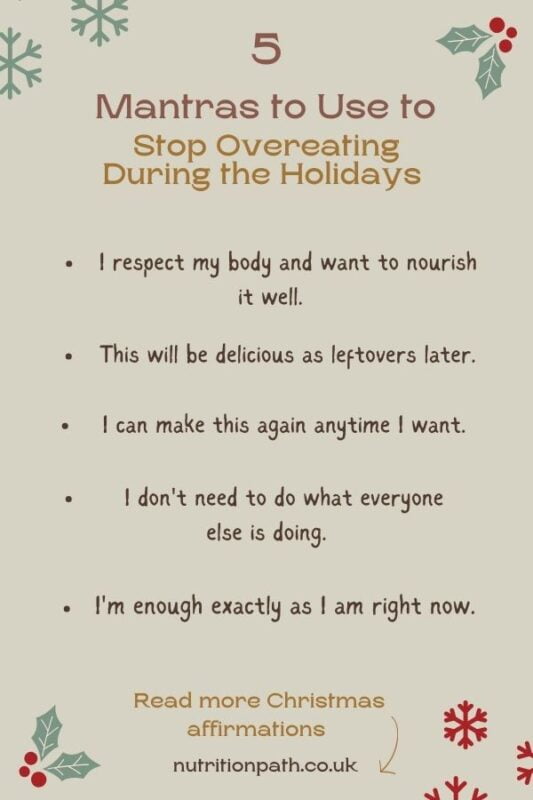
Mantras to Use to Stop Overeating During the Holidays
When it comes to festive overeating, a few positive mantras can help you stay on track. Whenever you feel the urge to overindulge or feel social pressure, keep using one of these phrases that resonate with you:
- “I respect my body and want to nourish it well.”
- “This will be delicious as leftovers later.”
- “I respect my fullness and I choose to stop now.”
- ” I can make this again anytime I want.”
- “My health is more important than anything else.”
- “I can enjoy food fully by practicing mindful eating.”
- “I don’t need to do what everyone else is doing.”
- “I’m enough exactly as I am.”
These mantras can help to put things into perspective and remind you that overeating during the holidays doesn’t define who you are or how much willpower you have.
The Bottom Line
Finally, remember that IT’S OK to enjoy the holiday season. It usually involves special holiday foods, family, friends and fun activities—all of which are super valuable for your mental and physical health in the darker months of the year.
Rather than depriving yourself or feeling guilty for indulging a little, try to commit to keeping a balance with your food habits for the majority of the time and allow yourself the fun foods.
A little bit of planning can go a long way when it comes to festive overeating. Follow the tips above and you can make it through the festive season without feeling like you’ve deprived yourself!
Happy Holidays! 🎄🎉🥂
FAQ About Overeating During the Holidays
-
Why do I overeat during the holidays? How can I prevent it this year?
The festive season is packed with special foods, festive gatherings, emotional triggers and stress. Focus on nourishing yourself well ahead of gatherings, keep regularity of meals and eat slowly when in social gatherings. Preparing ahead of time and arriving at events well-nourished reduces overeating urges.
-
How can I enjoy holiday foods without feeling guilty or overeating?
Allow yourself festive foods—restriction increases cravings and bingeing. Eat mindfully, slow down, and engage your senses while eating. Pair this with self-care and regular meals throughout the season so you don’t arrive at events overly hungry. Enjoying food without guilt helps prevent overeating.
-
What strategies can help me avoid overeating at holiday parties or events?
Eat balanced meals earlier in the day, avoid long gaps between meals, and include protein for steadier energy. At the event, focus on conversations rather than constantly scanning the food. Serve yourself smaller portions, eat slowly, and check in with your hunger and fullness cues. You can find more strategies in the full article.
-
How can I navigate temptations and food triggers during the holiday season?
Before each event, identify your typical triggers—certain foods, people, or emotions—and decide how you want to respond. Set boundaries (with yourself or others) and prepare for food pushers. Having a simple action plan reduces decision-fatigue and keeps you grounded around tempting foods.
-
What should I do if I tend to emotionally eat during the holidays?
Don’t rely on willpower or restriction. Notice your emotional triggers, plan nourishing meals, and support yourself with rest and self-care. Create a plan for moments when you feel stressed, lonely, or overwhelmed so you have supportive options besides food. More emotional-eating strategies are included in the full article.
Further reading:
Herbalife Nutrition. (2021, December 9). Holiday Habits Survey reveals 64% of Americans push healthy “New Year, New Me” to after the holidays [Press release]. PR Newswire. https://www.prnewswire.com/news-releases/holiday-habits-survey-reveals-64-of-americans-push-healthy-new-year-new-me-to-after-the-holidays-301441220.html
White, M.P., Alcock, I., Grellier, J. et al. Spending at least 120 minutes a week in nature is associated with good health and wellbeing. Sci Rep 9, 7730 (2019). https://doi.org/10.1038/s41598-019-44097-3
Kadhim, N., Amiot, C. E., & Louis, W. R. (2023). The buffering role of social norms for unhealthy eating before, during, and after the Christmas holidays: A longitudinal study. Group Dynamics: Theory, Research, and Practice, 27(2), 133–150. https://doi.org/10.1037/gdn0000179
Medina, N. d., de Carvalho-Ferreira, J. P., Beghini, J., & da Cunha, D. T. (2024). The Psychological Impact of the Widespread Availability of Palatable Foods Predicts Uncontrolled and Emotional Eating in Adults. Foods, 13(1), 52. https://doi.org/10.3390/foods13010052
Zerón-Rugerio, M. F., Doblas-Faxeda, S., Diez-Hernández, M., & Izquierdo-Pulido, M. (2023). Are Emotional Eating and Other Eating Behaviors the Missing Link in the Relationship between Inadequate Sleep and Obesity? A Systematic Review. Nutrients, 15(10), 2286. https://doi.org/10.3390/nu15102286

2 thoughts on “Why You Overeat at Christmas & Thanksgiving and Exactly How to Prevent It”